Mechanical lapping: principles, benefits, and industrial applications

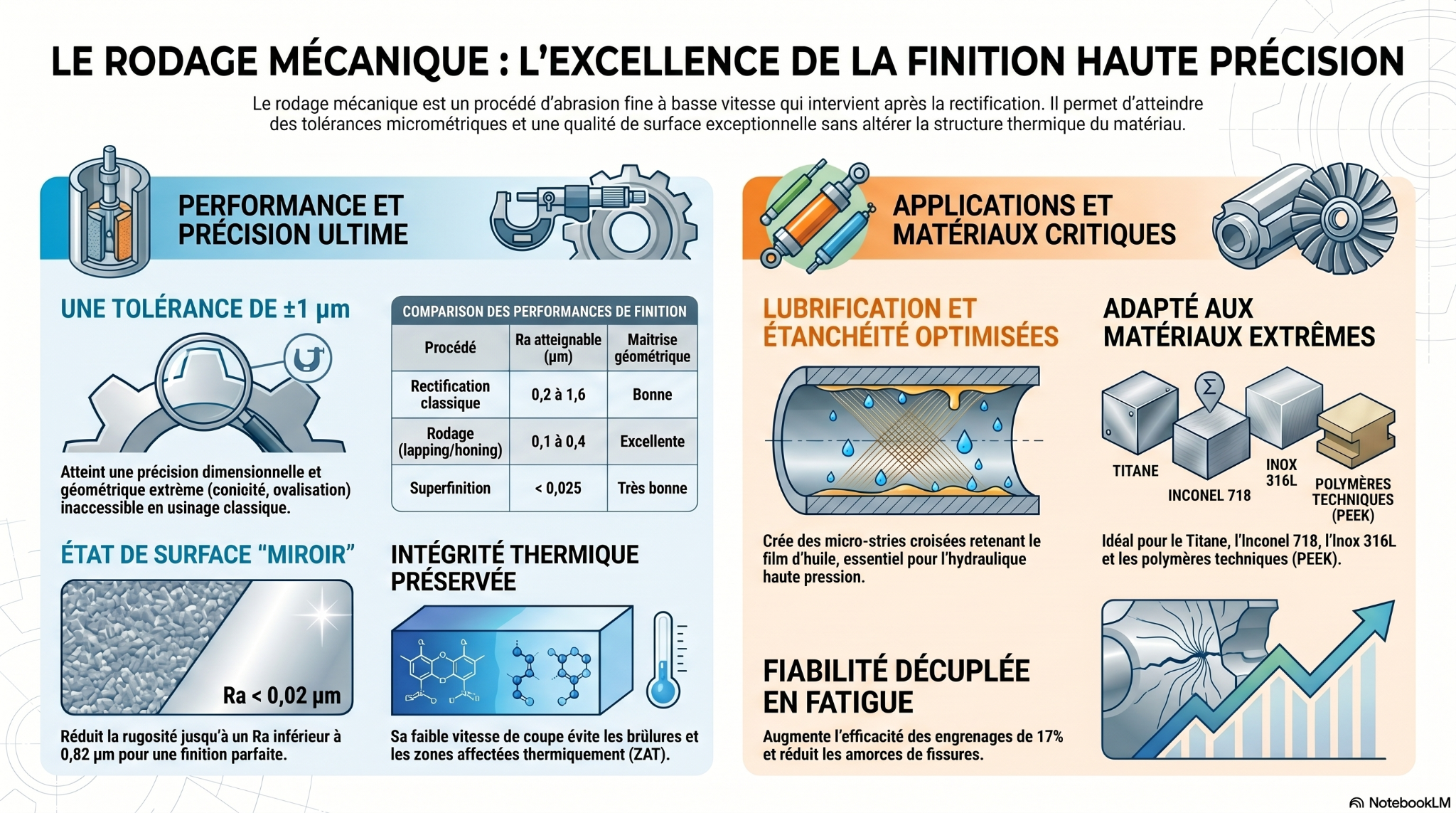
Mechanical lapping is an abrasive finishing process that achieves tolerances of less than ±1 µm and mirror-like surface finishes (Ra < 0.025 µm) on the most demanding materials: titanium, Inconel 718, and 316L stainless steel. By preserving metallurgical integrity and maximizing load-bearing capacity, it is essential in precision hydraulics, aerospace, and vacuum technologies. At Zedce, the in-house integration of CNC machining, grinding, and superfinishing ensures uncompromising quality and eliminates lead times for your critical parts.
Achieving a micron-level tolerance and a mirror-like surface finish cannot be improvised. When a part must ensure a metal-to-metal seal, withstand fatigue in an aerospace actuator, or provide a biocompatible surface for an implant, conventional grinding sometimes reaches its limits.
The mechanical lapping process is precisely the fine abrasive method that takes over. This approach transforms an already ground surface into a high-precision functional interface that is geometrically controlled and metallurgically preserved.
This article details how lappingworks, its technical advantages over other finishing processes, the materials involved, and the sectors where it is indispensable.
Key takeaways:
The essentials of mechanical lapping:
- Definition: a low-speed abrasive machining process that removes infinitesimal amounts of material to achieve extreme dimensional and geometric precision.
- Tolerances: from a few microns down to ±1 µm for high-precision applications.
- Surface finish: from a few tenths of a micron for standard honing down to an Ra of less than 0.02–0.03 µm for superfinishing (mirror finish).
- Material integrity: very low heat generation, resulting in a negligible risk of heat-affected zones (HAZ) or grinding burns.
- High bearing ratio: significantly higher load-bearing surface area compared to simply turned or ground parts, ideal for oil film retention.
- Materials: treated steels (100C6), 316L stainless steel, Ti6Al4V titanium, Inconel 718, and certain engineering polymers such as PEEK.
- Critical sectors: precision hydraulics, aerospace and space, automotive (injection).
- Performance gains: reducing roughness through superfinishing significantly improves contact fatigue resistance and gear efficiency.
- At Zedce: honing and superfinishing (stoning, abrasive film finishing, mass finishing) are handled in-house using a fleet of multi-axis CNC grinding and machining equipment.
What is mechanical honing? Fundamental principles
Mechanical honing is recognized for its ability to achieve levels of precision that are difficult to reach with conventional processes. To fully grasp its added value, it is essential to understand its fundamental mechanisms, its specific kinematics, and what sets it apart from other superfinishing techniques.
Definition and principle
The honing process is an abrasive machining method that involves removing extremely small amounts of material using a tool called a hone, combined with either an abrasive paste suspension (alumina, silicon carbide, diamond, or CBN grains) or bonded abrasive stones or films.
The cutting speed is very low compared to that of a grinding wheel, which is what makes the process unique. Indeed, the goal is not material removal rate, but geometric perfection and surface finish.
The objective is therefore not to bring the part to its rough dimension, but to finish a surface that has already been machined and ground to give it its final function : sealing, precision guidance, or optimized mechanical contact.
Cross-hatch kinematics
The honing process relies on a relative cross-hatch movement between the tool and the part, combining rotation and translation. This movement generates a network of intersecting micro-grooves, which are not a defect but a desired functional characteristic. They form micro-reservoirs capable of retaining a lubricating oil film, which is essential in engine bores or hydraulic components.
Differentiating between lapping and honing
These abrasive finishing operations are often confused. However, there is a clear technical distinction:
- Lapping: the abrasive is in free suspension (paste or slurry) between the part and a lapping plate. This is the preferred solution for flat or spherical surfaces and for the finest superfinishing operations.
- Honing: the tool is expandable and carries bonded abrasive stones applied against the wall. This is the standard method for internal bores (cylinders, liners, cylinder barrels).
Abrasive cloth finishing (polishing) and mass finishing (vibratory finishing) round out this family of superfinishing processes.
Key parameters of mechanical lapping
Mastering lapping relies on the balance between three elements: the abrasive grain, the binder and the relative motion, in addition to pressure and lubrication. Fine-tuning these parameters determines both the resulting surface finish and the preservation of the part's integrity.
The choice of abrasive and grain size is based in particular on ISO 525, the standard for bonded abrasive products.
The technical advantages of mechanical lapping
Choosing mechanical lapping meets strict functional requirements for the manufacturing of critical industrial parts. Beyond mere aesthetics, this superfinishing process delivers dimensional and tribological performance unattainable through conventional machining, ensuring a level of reliability compatible with mission-critical applications.
Extreme geometric and dimensional precision
Lapping does more than just improve the surface; it corrects geometric defects left by previous operations. Whether dealing with taper, out-of-roundness, barrel shapes, or residual waviness, the process restores cylindricity and flatness to the most stringent standards, with tolerances commonly held to within ±1 µm.
Exceptional surface finish
Where standard grinding leaves a roughness in the micron range, lapping goes much further, and superfinishing achieves Ra values below 0.025 µm, resulting in a mirror-like finish. Suppliers specializing in superfinishing films confirm that roughness levels as low as 0.025 microns can be achieved, consistently and repeatably.
Beyond the Ra figure alone, it is the bearing area ratio that changes the game. The profile of a honed surface features flattened peaks and preserved valleys (analyzed via the Abbott-Firestone curve), which maximizes the actual load-bearing surface area, far more effectively than a surface that has only been turned or ground. This load-bearing capacity ensures both sealing and contact longevity.
Preserving material integrity
Intensive grinding can generate a heat-affected zone (HAZ), or even grinding burns and local decarburization, which can weaken the part. Honing, due to its very low cutting speed, generates virtually no heat. Consequently, it preserves the metallurgical structure and does not introduce residual thermal stresses. For bearing steels or treated parts, this thermal neutrality is crucial.
Proven fatigue life
Improving surface finish has a direct and measurable effect on the service life of parts in contact. In a 2007 study, General Motors and Ohio State University measured an efficiency increase of approximately 17% on superfinished gears.
In terms of fatigue, tests conducted by REM Surface Engineering show that superfinished parts exhibit a fatigue life at least equivalent to that of honed parts and approximately six times greater than that of shot-peened parts. Reducing roughness means reducing crack initiation sites and stress concentrations, thereby delaying failure.
Mechanical honing versus other superfinishing techniques: a comparative analysis
Choosing the right finishing process depends on the target roughness, the required geometric control, and the material's thermal sensitivity. The table below positions honing among similar processes (indicative values, variable depending on material and geometry).
In practice, we choose lapping over grinding whenever the function requires high load-bearing capacity, perfect geometry or thermal neutrality that a grinding wheel cannot guarantee. It should be noted that polishing can in no way replace lapping. Indeed, its purely aesthetic pursuit of shine risks altering geometric precision by rounding off edges.
Compatible materials and industrial requirements
Lapping can be applied to almost all metals, including the hardest and most difficult to machine.
At Zedce, commonly lapped materials include:
- Treated steels (100C6 type, bearing steel)
- Stainless steels (316L stainless steel)
- Titanium (Ti6Al4V)
- Superalloys (Inconel 718)
- Engineering polymers (PEEK)
The complex machinability of these metals (refractory, tough, and work-hardening sensitive) requires perfect control over honing pressures and the selection of an appropriate abrasive (often diamond or CBN). Poorly controlled pressure risks seizing or excessive surface work-hardening. This is precisely where process expertise makes the difference between a successful finish and a scrapped part.
Industrial applications: where is honing essential?
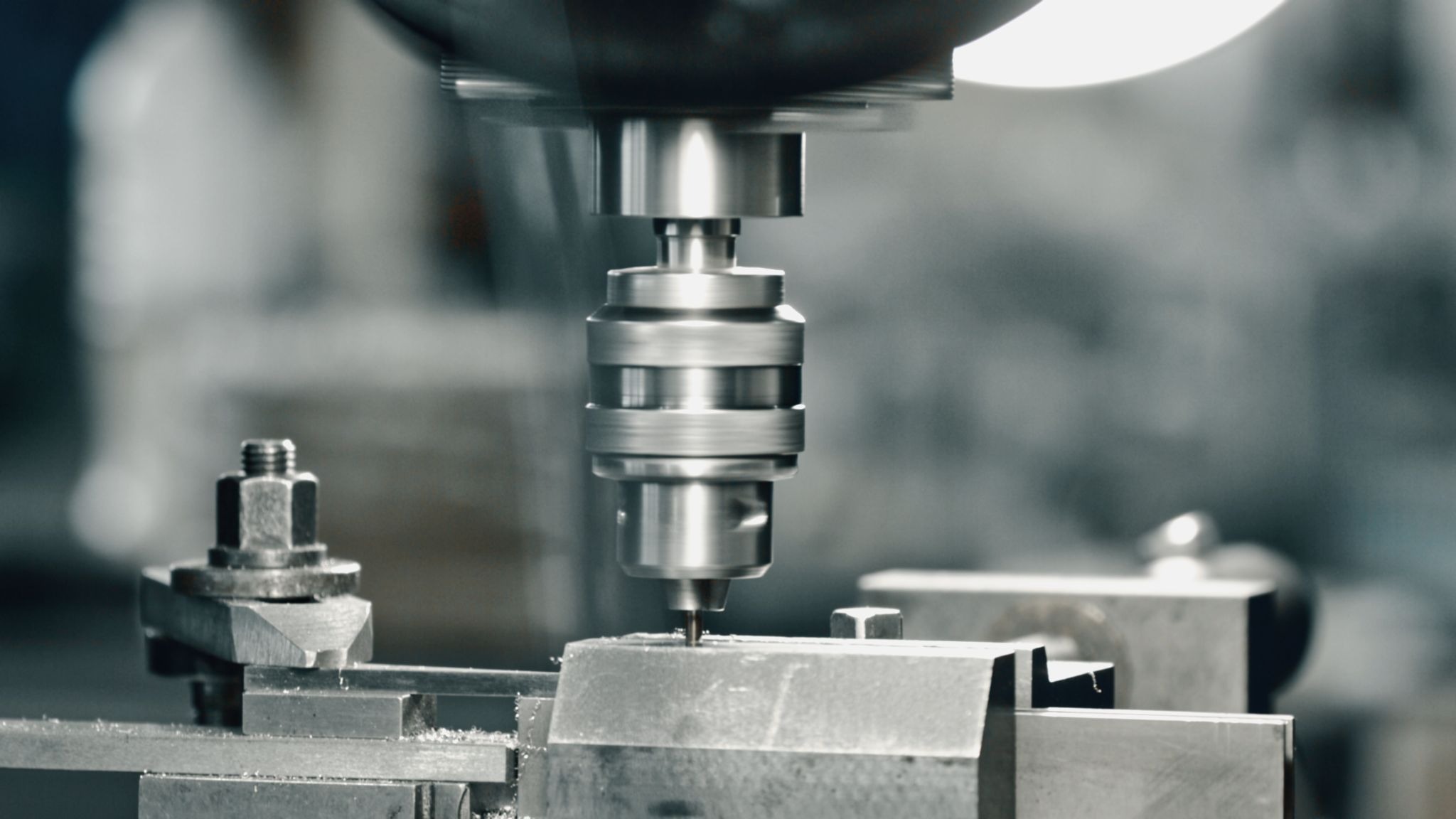
The mechanical honing process goes far beyond simple finishing to become a technical prerequisite for components subject to extreme stress.
Whether it is to ensure a perfect seal without elastomer gaskets or to maximize fatigue resistance in complex alloys (titanium, Inconel 718, 316L stainless steel), these are the sectors where this operation is indispensable.
Precision hydraulics
Spool valves, check valves, and connectors: the challenge is achieving metal-to-metal sealing without elastomer gaskets. Honing allows for a perfect sliding fit between a shaft and its bore (clearance of only a few microns), while creating the micro-grooves that retain the oil film.
Automotive and injection systems
For high-pressure injection components or piston pins, honing creates the cross-hatched lubrication patterns essential for the proper operation and longevity of moving parts.
Aerospace and defense
For servovalves and actuators, reliability is paramount and fatigue resistance is critical. Surface quality directly determines system safety. These sectors rely on rigorous standards for traceability and process certification.
Vacuum technologies
Flanges, metal seal seats (CF/ConFlat type), valve components, and feedthroughs: ultra-high vacuum (UHV) systems require perfectly flat and smooth surfaces to ensure gas-tight sealing and minimize outgassing.
A honed surface reduces the roughness where gases and contaminants can become trapped, and ensures the metal-to-metal contact required for the seal seat. Here, mastering surface finish determines the achievable vacuum quality and installation stability.
Standards and quality control

The value of an operation of lapping is proven through measurement. Quality control relies on a set of standards and metrological resources.
In terms of metrology, our inspection process combines surface roughness testers (Ra, Rz, Rmax), coordinate measuring machines (CMM), machine vision, and statistical process control (SPC) to ensure serial compliance.
For reference, CETIM characterizes form and surface defects on circular parts using equipment with radial precision of less than 0.02 µm, the very order of magnitude involved in precision lapping.
The Zedce approach: integrated superfinishing
What sets Zedce apart is the integration of the entire precision chain under one roof, a rare offering in the Arve Valley:
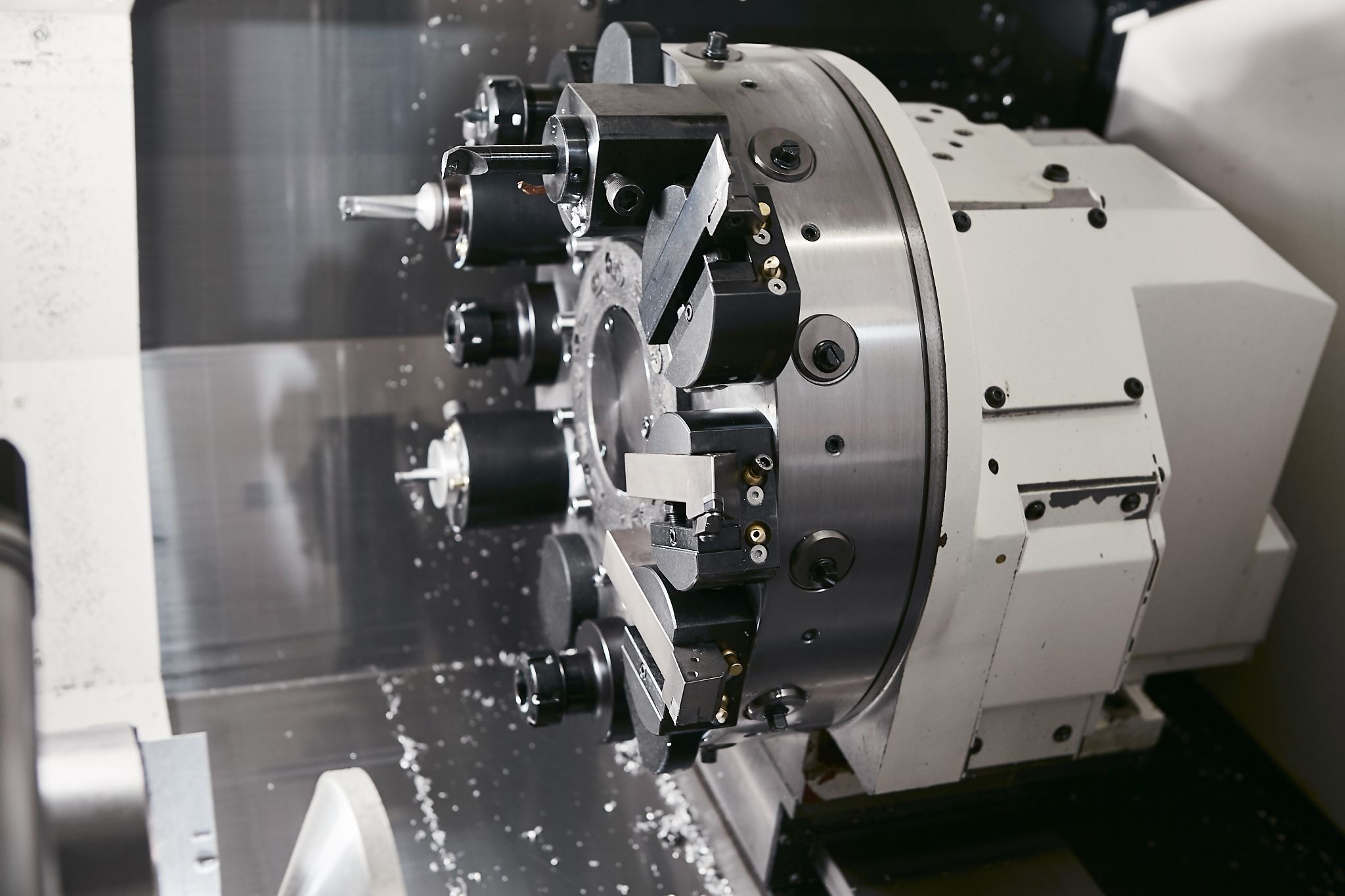
- Multi-axis CNC machining (Nakamura, HAAS, Stäubli robotics)
- Grinding: surface (Diskus), cylindrical (Kellenberger), and internal (Stähli)
- Superfinishing: stoning, abrasive finishing, vibratory finishing, brushing
- Advanced quality control: CMM, machine vision, SPC
The customer benefits directly. By avoiding fragmented external subcontracting, Zedce drastically reduces overall lead times while maintaining end-to-end quality control, even on demanding materials like Titanium, Inconel 718, or 316L Stainless Steel.
Do your parts require micron-level finishing and uncompromising metallurgical integrity? Zedce’s integrated honing and superfinishing processes ensure the dimensional precision and surface quality of your critical components. Request a feasibility analysis or explore our precision grinding services.
FAQ - Your questions about mechanical honing
What is the difference between honing and grinding?
Grinding uses a high-speed wheel to remove material quickly, which generates heat. Honing is a low-speed finishing process that uses abrasive stones or paste to improve surface finish and geometry without thermally altering the part.
Can mechanical honing correct geometric defects?
Yes, that is one of its primary purposes. It corrects micrometric defects such as out-of-roundness, taper, or waviness left by previous operations, ensuring perfect cylindricity and flatness.
Which metals can be honed?
Almost all of them, even the hardest: treated steels (100C6), stainless steel (316L), superalloys like Titanium Ti6Al4V or Inconel 718, and certain technical polymers like PEEK.
Why is honing essential for hydraulic parts?
High-pressure hydraulics often require metal-to-metal sealing. Honing allows for a perfect sliding fit between a shaft and a bore (with a clearance of just a few microns), while creating cross-hatched micro-grooves that retain the oil film.
Does honing replace polishing?
No. Polishing is for aesthetic purposes (shine) and tends to round off edges or degrade geometry. Lapping improves surface finish while maintaining, or even improving, strict dimensional tolerances.
Does lapping change the hardness of the part?
No, when performed correctly. Its very low cutting speed prevents overheating and the formation of a heat-affected zone, preserving the material's structure and hardness. However, excessive pressure can cause surface work hardening, which is why parameter settings are so important.
What is the cost of a lapping operation?
Lapping is more expensive than simple grinding due to cycle times and the associated metrology. For critical parts, this additional cost is justified by the increased reliability and the reduction in scrap and returns. The best ROI is achieved by integrating lapping into the production line, which eliminates the costs and lead times of subcontracting.
.jpg)



.webp)
.webp)
.webp)